Description
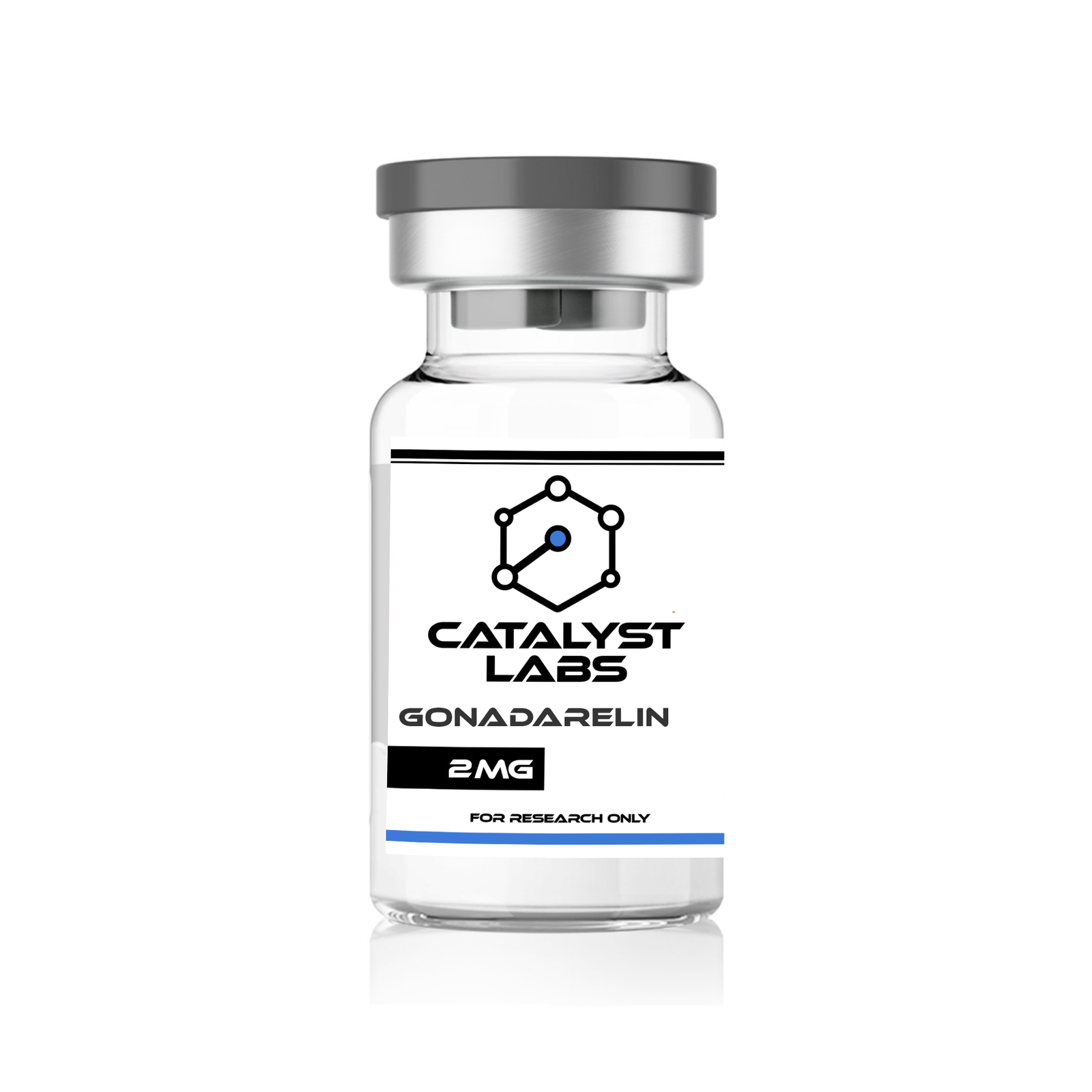
Gonadorelin (Gonadotropin-Releasing Hormone / GnRH Peptide Analog)
Approximate Conversion:
1 mg Gonadorelin ≈ 100 µg active GnRH ≈ 100 IU (approximate biological potency)
(Note: IU-to-mg equivalence is approximate since activity is measured biologically, not by mass.)
Molecular Formula: C₅₅H₇₅N₁₇O₁₃
Molecular Weight: 1,182.3 g/mol
Sequence: Pyr-His-Trp-Ser-Tyr-Gly-Leu-Arg-Pro-Gly-NH₂
CAS Number: 33515-09-2
Purity: ≥98% (HPLC)
Form: Lyophilized Powder
Storage: Store at −20 °C. Protect from light and moisture.
Description
Gonadorelin (Gonadotropin-Releasing Hormone; GnRH) is a synthetic decapeptide identical to natural hypothalamic GnRH, which regulates the release of luteinizing hormone (LH) and follicle-stimulating hormone (FSH) from the anterior pituitary.
In research settings, Gonadorelin is widely used to investigate hypothalamic–pituitary–gonadal (HPG) axis signaling, gonadotropin secretion kinetics, and feedback control mechanisms involving sex steroids and pituitary peptide regulation.
When administered in pulsatile patterns, it mimics endogenous GnRH activity and stimulates reproductive hormone release, while continuous exposure causes receptor desensitization and suppression—providing a model for studying receptor dynamics, endocrine plasticity, and hormone regulation.
Intended Use
This product is intended for laboratory research use only.
It is not for human consumption, diagnostic, or therapeutic applications.
All handling should be performed by qualified professionals in a controlled research environment.
Key Research Applications
-
Investigation of GnRH receptor activation and downstream LH/FSH signaling
-
Studies on hypothalamic–pituitary–gonadal axis regulation and feedback control
-
Research on reproductive endocrinology, fertility, and gonadal hormone synthesis
-
Analysis of pulsatile vs. continuous GnRH administration on receptor desensitization


Reviews
There are no reviews yet.